Administering approved veterinary products through poultry drinking water is common because it can reach many birds with relatively little handling. Yet water medication fails when lines are dirty, mixing is inaccurate, consumption is uneven, or leftover solution is mishandled. This article focuses on operational principles that support safe, label-compliant water administration under veterinary supervision.
It does not provide dose calculations or stock-solution formulas. Always follow the registered label and veterinarian instructions for the specific product in use.
Clean water is a medicine prerequisite
Birds drink far more water than they eat feed on a weight basis in many conditions. Contaminated water or biofilm-laden pipes can introduce pathogens, reduce product stability, and create uneven delivery. Between flocks — and as directed during production — farms should clean and sanitise lines according to written SOPs compatible with their drinker technology.
FAO guidance on responsible antimicrobial use in poultry emphasises hygienic water of good quality and watering systems that can distribute medicines and be cleaned of residues. See the FAO antimicrobial resistance portal for related production-hygiene themes.
Line hygiene and cross-contamination
- Flush lines before medication days when SOPs require it.
- Avoid leaving medicated water in tanks beyond the period allowed by the label.
- Clean header tanks and proportioners so previous products do not contaminate the next course.
- Segregate measuring tools used for different products where practical.
Mixing according to the label
Water-soluble powders and solutions dissolve and disperse differently. Some products need staged dissolution; others are sensitive to water hardness or pH. Follow the manufacturer’s approved directions — not improvised ratios from previous flocks.
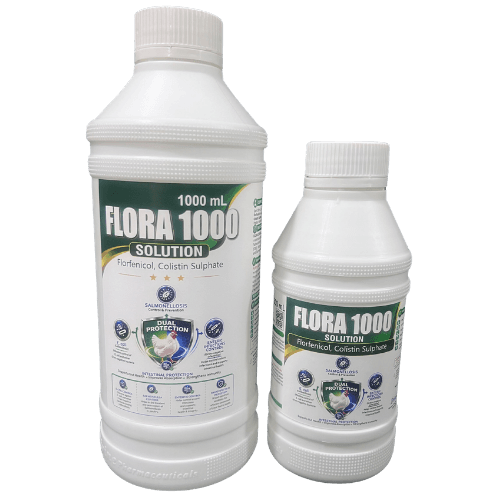
Divine Pharmaceuticals’ poultry catalogue includes water-soluble powders such as Noxy Flor and Doxine 200, and solutions such as Flora 1000, En Coli Fort, and Tilco Phos Super. Product pages list verified composition and packs; labels govern mixing.
Uniform distribution and flock consumption
Medication only works if birds drink. Hot weather can increase intake; respiratory discomfort or inaccessible drinkers can decrease it. Walk the house during medication to confirm drinker function and bird distribution. Consider how light programmes and feed schedules interact with peak drinking periods.
For product selection considerations before water medication is planned, read How to Choose the Right Water-Soluble Veterinary Product for Poultry.
Records, leftovers, and responsible use
Record product name, batch number, quantity mixed, houses treated, start and end times, and any observations. Accurate records support veterinary follow-up, residue compliance where applicable, and investigations if outcomes differ from expectations.
Dispose of leftover medicated water according to label and local environmental rules. Do not pour concentrated leftovers into drains without checking requirements. Broader stewardship expectations are summarised in Responsible Use of Veterinary Medicines in Poultry Production.
Manufacturing quality behind soluble products
Consistent solubility and packaging integrity begin in manufacturing. Explore Divine Pharmaceuticals’ Manufacturing process flows and Quality & Compliance credentials. Request documents through Resources or submit a product inquiry.
Proportioners, tanks, and drinker types
Farms use header tanks, dosatrons, and various nipple or bell drinker designs. Each setup has failure modes: air locks, incorrect dilution ratios, sediment in tanks, or uneven pressure across long houses. Before medication day, verify that the chosen device is calibrated and that staff know how to set it for the product volume prescribed by the veterinarian and label.
After medication, flush according to label and farm SOP so residues do not linger. Cross-contamination between courses can confuse stewardship reviews and residue investigations, especially when multiple products rotate through the same header system.
Environmental influence on water intake
Heat increases drinking; chilling or disease may suppress it. Light intensity and feed form also change drinking patterns. When intake drops mid-course, investigate climate and illness before assuming the product failed. Coordinate with the veterinarian before extending or repeating courses outside the approved plan.
Safety for people mixing medicines
Staff should use appropriate personal protective equipment when handling concentrates, avoid creating dust clouds with powders, and wash after mixing. Keep medicines locked away from children and unauthorised personnel. Spills should be cleaned per label hazard statements and local safety rules.
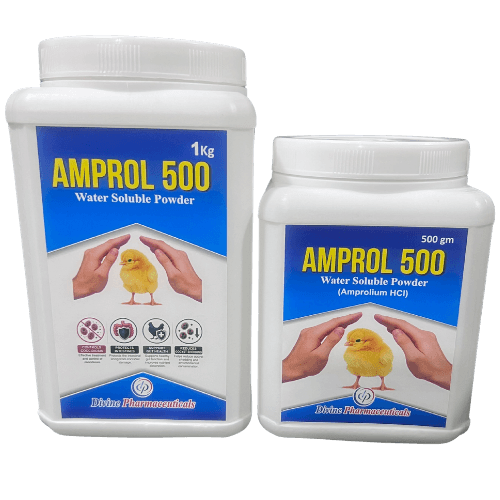
Training materials can reference Divine Pharmaceuticals product pages for pack identification — for example solution bottles such as Tilco Phos Super versus powder packs such as Amprol 500 — while reminding teams that labels remain the authority for handling and use.
Auditing your water-medication SOP
- Map every valve, tank, and drinker line in each house.
- Document who is trained to mix and who double-checks steps against the label.
- Schedule line cleaning and keep logs with dates and responsible persons.
- Review the last three medication events for deviations and outcomes with your veterinarian.
- Update SOPs when equipment, products, or house layouts change.
An audited SOP reduces variability between shifts and makes training new staff faster. It also demonstrates due diligence if customers or regulators ask how medicines are controlled on site.
Common failure modes and how teams spot them early
Typical water-medication failures include clogged filters, incorrect proportioner settings, forgotten bypass valves, air-locked lines, and stock solutions prepared in the wrong volume of water. Early warning signs include sudden drops on the water meter, birds clustering at certain drinker lines, foam or sediment in tanks, and leftover volumes that do not match expected consumption.
Assign a second person to verify critical steps on medication days: product identity and batch, mixing sequence per label, device setting, and start time. Dual control is especially valuable on multi-house sites where several teams work in parallel.
If a failure is detected mid-course, pause and call the veterinarian before improvising. Document what went wrong so the next flock benefits. Persistent equipment faults should trigger maintenance tickets, not repeated workarounds that quietly undermine every future course.
Coordinating water systems with product logistics
Water medication succeeds only when product logistics and house operations move together. Confirm that the correct registered product, pack size, and batch are on site before mixing day. Cross-check labels against the veterinarian’s written instruction. Store unopened packs according to label conditions so solubility and labelling integrity are preserved until use.
Catalogue examples of water-administered poultry presentations include powders such as Amprol 500 and Doxine 200, and solutions such as En Coli Fort, Flora 1000, and Tilco Phos Super. Composition and packs are listed on each product page; always follow the approved label. For formulation-selection questions, see How to Choose the Right Water-Soluble Veterinary Product for Poultry.
Manufacturer quality systems underpin confidence that packs arriving at the farm match registered specifications. Learn how Divine approaches controlled production on the Manufacturing and Quality & Compliance pages. When documentation is required for audits, use the Resources Request Document pathway rather than informal file sharing.
Close the loop after every medication course: confirm flush completion, archive batch numbers, note water consumption versus expectation, and record clinical outcomes observed by the veterinarian. Those records feed continuous improvement and support responsible use commitments when customers or regulators ask how medicines are controlled on site.
Treat water medication as a managed process with clear owners, checklists, and stop-rules — not as an informal chore. Farms that invest in drinker maintenance, staff dual-control, and honest post-course reviews consistently achieve more uniform exposure and fewer wasted packs, while staying aligned with label and veterinary direction.
Authoritative references
For stewardship and production hygiene context, consult the WHO antimicrobial resistance fact sheet, WOAH’s antimicrobial resistance initiative, and FAO antimicrobial resistance resources.
Frequently asked questions
Can I leave medicated water in the tank overnight?
Only if the approved label and veterinarian instructions allow it. Many products have time limits for mixed solutions — follow those limits.
What if water is very hard?
Water chemistry can affect dissolution and stability. Discuss local water quality with your veterinarian and follow any label precautions for your product.
How do I know birds received enough product?
Monitor water meter readings, bird behaviour, and drinker function. Final clinical interpretation belongs with the veterinarian overseeing the flock.
Where are Divine water-administered poultry products listed?
On the Products page under the poultry category. Each product page shows dosage form (solution or water-soluble powder) and pack presentations.
Who do I contact about dosing equipment questions?
Equipment vendors and your veterinarian are primary. Divine Pharmaceuticals can support product documentation and commercial queries via Contact.
Related Articles
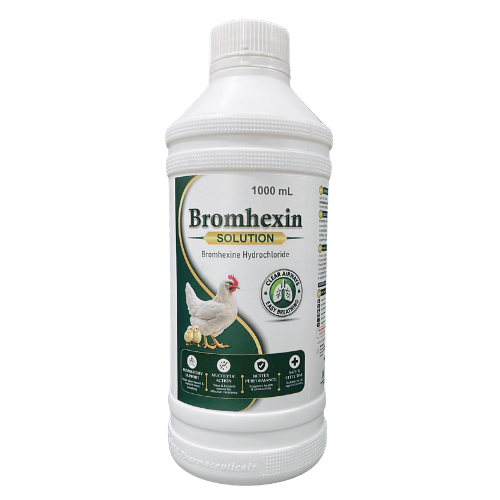
Match products to your water system
Explore Divine Pharmaceuticals poultry solutions and water-soluble powders, then contact us for documentation or distribution support.