
Water-soluble veterinary products are widely used in commercial poultry systems because drinking water reaches large numbers of birds quickly and can support flock-level administration when a veterinarian has confirmed that medication is appropriate. Choosing the right product is not simply a matter of matching a brand name to a symptom. It requires diagnosis, an understanding of formulation and water systems, attention to label directions, and a commitment to responsible use.
This article outlines practical questions producers, distributors, and veterinary professionals can ask when evaluating water-soluble options in Divine Pharmaceuticals’ poultry catalogue and similar registered products. It is educational corporate guidance — not a substitute for veterinary diagnosis or approved product labelling.
Start with diagnosis, not with a product list
Respiratory signs, digestive changes, poor growth, or uneven performance can have many causes: infectious agents, litter and air quality, nutrition, management stress, or mixed challenges. Selecting a veterinary medicine before the cause is understood risks unnecessary treatment, delayed correction of environmental problems, and avoidable antimicrobial pressure.
Veterinary diagnosis should guide treatment decisions. Laboratory support, necropsy findings, and flock history often matter as much as clinical observation. Once a veterinarian has identified a need for medication, product selection can focus on registered formulations suited to the species, production system, and water administration route.
Why water-soluble formulations are common in poultry
In intensive poultry production, birds typically share a drinking-water network. When medication is indicated, water administration can help deliver a consistent message across a house — provided consumption is adequate, lines are clean, and mixing follows the label. Feed medication remains important in many programmes, but water systems offer operational flexibility for short, supervised courses under veterinary direction.
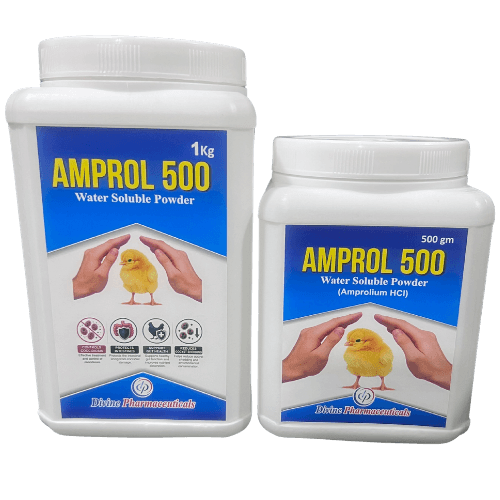
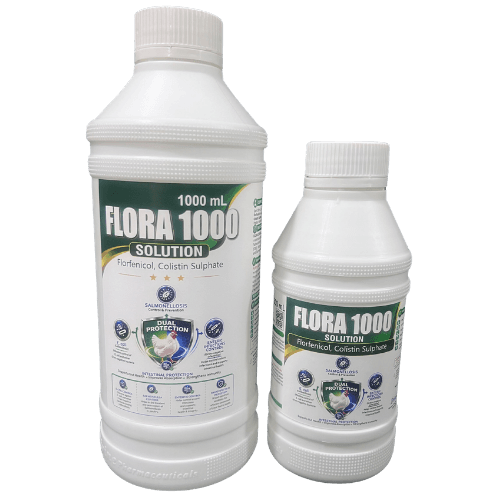
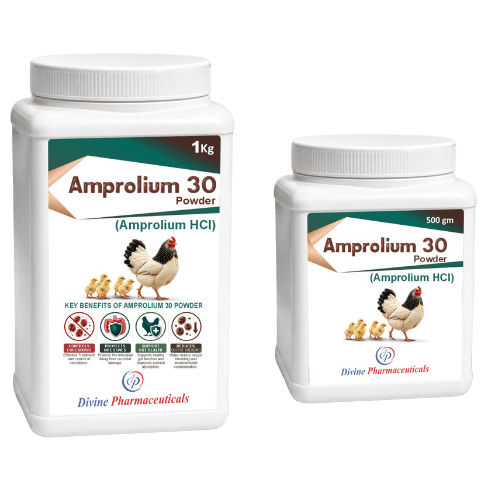
Divine Pharmaceuticals manufactures both water-soluble powders and solution dosage forms for poultry. Examples in the current catalogue include powder presentations such as Amprol 500 and Amprolium 30, and solution presentations such as Bromhexin, Tilco Phos Super, and En Coli Fort. Composition and pack details are listed on each product page; always follow the approved label for use.
Powder versus liquid: practical differences
Water-soluble powders are often supplied in multi-kilogram packs suited to house-scale mixing. Solutions may be preferred where measured liquid dispensing fits farm equipment. Neither form is universally “better.” Fit depends on solubility under local water conditions, available dosing equipment, labour practices, and the veterinarian’s prescribed approach.
- Confirm the dosage form on the product page and label before ordering.
- Check whether farm equipment is calibrated for powder stock solutions or liquid metering.
- Ask how water hardness, pH, or residual chlorine may affect dissolution or stability — and follow label guidance.
- Verify pack sizes against flock water intake so leftover mixed solution is not stored beyond label advice.
Water quality and flock uniformity
Even a well-chosen product underperforms if birds do not drink evenly. Hot weather, poor ventilation, blocked drinkers, biofilm in lines, or uneven house layout can create pockets of under- and over-exposure. Before medication days, confirm that drinkers work, lines are flushed according to farm SOP, and birds have unrestricted access to water.
For a deeper look at operational water-system practices, read Supporting Poultry Health Through Water Medication Systems.
Label compliance, storage, and pack selection
Registered veterinary medicines must be used according to the approved label and national regulations. That includes species, route, mixing instructions, storage conditions, and any mandatory withdrawal or residue controls stated on the product information. Do not invent regimens from memory or peer advice.
Pack size is an operational decision as well as a commercial one. Smaller packs may reduce waste for lower water demand; larger packs may suit continuous house programmes when inventory control is strong. Review expiry dating, batch identity, and storage temperature on arrival — themes expanded in our article on responsible use of veterinary medicines in poultry.
Quality of manufacture matters
Solubility, assay consistency, and packaging integrity depend on manufacturing controls. Divine Pharmaceuticals operates under documented quality systems described on our Quality & Compliance and Manufacturing pages. When requesting literature, use Resources to submit a document request for catalogues or certificates relevant to your market.
Questions to ask before you buy
- Has a veterinarian confirmed that medication is needed?
- Is the product registered for the intended poultry use in your market?
- Does the dosage form match your water system and labour practices?
- Are pack sizes and storage conditions realistic for your site?
- Do you have a plan for records, leftover solution disposal, and follow-up monitoring?
If you need help navigating the poultry catalogue, contact our team for product or distribution inquiries. For suspected quality issues after use, follow your market’s pharmacovigilance channels via Pharmacovigilance.
Matching product form to farm workflow
Beyond chemistry, fit the product to how your team actually works. Houses with automated proportioners may favour liquids that meter cleanly; sites that prepare daily stock solutions may prefer powders with clear dissolution steps. Labour availability matters: a product that requires multi-stage mixing under time pressure is more likely to be prepared incorrectly.
Discuss with distributors and veterinarians how cold-chain or ambient storage requirements interact with your warehouse. Packaging that arrives damaged should be quarantined and reported — see our product complaint channel when quality concerns arise after receipt.
Documentation and market registration
Registration status varies by country. A product listed on this website may not be authorised in every market where you operate. Confirm local registration with your veterinarian and Divine Pharmaceuticals commercial contacts before importing or promoting a product. Request catalogues, certificates, and supporting literature through Resources rather than relying on unofficial photocopies.
When comparing presentations — for example different Amprolium HCl strengths such as Amprol 500 versus Amprolium 30 — treat strength and pack size as catalogue facts. The veterinarian decides which registered option, if any, belongs in a given flock plan.
Building a short-list with your veterinarian
A practical short-list usually includes two or three registered candidates that match the diagnosis, dosage form constraints, and inventory reality. Review solubility notes, pack logistics, and previous flock outcomes together. Avoid expanding the short-list into an informal trial of multiple products in the same house without veterinary design — that confuses interpretation and stewardship.
After treatment windows close, capture what worked operationally: mixing time, water meter readings, and any adverse observations. Those notes improve the next selection cycle and support pharmacovigilance if something unexpected occurs. Teams that treat selection as a closed-loop process — diagnose, choose, administer, review — get more predictable results than those that jump between products week to week.
Working with distributors and manufacturers
Ask distributors for batch certificates when your market requires them, confirm lead times for preferred pack sizes, and clarify how returns of damaged stock are handled. Manufacturer quality systems, summarised on Divine Pharmaceuticals Quality & Compliance pages, underpin solubility and assay consistency that farms depend on during water medication.
Seasonal and flock-type considerations
Broiler, layer, and breeder systems differ in water equipment, biosecurity intensity, and medication logistics. Hot seasons raise water intake and can change how quickly a stock solution is consumed; cooler seasons may extend the time mixed product sits in lines if SOPs are not adjusted. Review seasonal patterns with your veterinarian when planning inventory of preferred pack sizes.
Young flocks and adult flocks also differ in drinking behaviour and in how evenly birds access drinkers. Uneven access is a product-selection risk as much as a management risk: if a subset of birds cannot drink freely, even a correctly chosen registered product will not reach the flock uniformly. Walk houses during peak drinking periods before medication days whenever possible.
Finally, align procurement lead times with veterinary programme calendars. Emergency ordering under time pressure increases the chance of substituting an unfamiliar pack size or dosage form. Keep a written preferred-product list — maintained by the veterinarian — so purchasing teams know which catalogue presentations are authorised for your sites.
Authoritative references
For broader context on responsible antimicrobial use and poultry production hygiene, see the FAO antimicrobial resistance portal, the WHO antimicrobial resistance fact sheet, and WOAH’s antimicrobial resistance initiative.
Frequently asked questions
Are water-soluble powders always better than solutions?
No. Choice depends on farm equipment, water conditions, pack logistics, and the veterinarian’s prescribed approach. Review the registered dosage form and label for each product.
Can I select a product based only on clinical signs?
Clinical signs are a starting point, not a diagnosis. Veterinary assessment should guide whether medication is needed and which registered product is appropriate.
Where can I see Divine Pharmaceuticals poultry water-soluble products?
Browse the poultry filter on the Products page. Individual product pages list composition, dosage form, and available pack presentations from the current catalogue.
How do I request product literature?
Use the Resources page Request Document workflow for catalogues and certificates. For commercial questions, submit a product inquiry via Contact.
What if birds are not drinking evenly during medication?
Investigate drinkers, line hygiene, house climate, and bird access before or during a course. Uneven water intake can undermine any water-administered product — discuss adjustments with your veterinarian.
Related Articles
Explore poultry products and speak with our team
Browse Divine Pharmaceuticals water-soluble powders and solutions for poultry, or contact us for product documentation and distribution support.