
Veterinary pharmaceutical manufacturers producing for poultry markets typically offer products in two broad water-administration categories: water-soluble powders (WSP) and oral liquid solutions. For distributors, the distinction goes well beyond the physical form of the product. It affects manufacturing requirements, packaging design, shelf-life expectations, storage conditions, farm application methods, and the inventory decisions you make when building or expanding a product portfolio.
This article is written for distributors and importers evaluating veterinary pharmaceutical suppliers. It does not provide dosage instructions or treatment recommendations. Administration and dosing are governed by approved product labels and veterinary direction in each market.
Manufacturing differences and what they mean for quality
Water-soluble powders are produced through blending and milling processes designed to create homogeneous dry mixtures of active pharmaceutical ingredient, excipients, and stabilisers. Manufacturing quality controls centre on blend uniformity — confirming that the active ingredient is evenly distributed throughout each batch. Physical characteristics such as particle size and dissolution profile are validated during formulation development and verified during routine QC testing.
Oral liquid solutions are manufactured through liquid mixing processes, often under controlled temperature and pH conditions, with preservative systems and filtration steps where required. The manufacturing environment requires dedicated equipment — liquid preparation vessels, filling lines calibrated for volume accuracy, and robust cleaning validation between product changeovers. Cross-contamination control is particularly critical: residues of one liquid product in shared equipment can carry over into the next batch if cleaning validation is not rigorous.
A manufacturer producing both formulation types with dedicated, segregated Oral Liquid and Powder manufacturing sections has made a significant capital and compliance investment. Segregation reduces cross-contamination risk, supports specialist quality controls for each dosage form, and indicates the manufacturer can service distributors with diverse portfolio requirements.
Packaging and presentation
Water-soluble powders are packed in moisture-protective materials: heat-sealed aluminium foil pouches, laminated sachets, or moisture-resistant lined bags. Pack sizes for commercial poultry use are typically calibrated to house-scale dosing — kilogram-range packs designed for stock-solution preparation. Labels must include dissolution instructions, storage conditions for the sealed pack, and guidance on prepared-solution handling.
Oral liquid solutions are packed in HDPE or glass bottles, or drums for bulk presentations. For poultry distribution, multi-litre bottles and drum formats are common where farm water systems can meter liquids accurately. Liquid packs require tamper-evident closures, volume markings or separate measuring devices, and clear differentiation between concentrate and ready-to-use dilutions on the label.
Shelf life, stability, and storage requirements
Water-soluble powders generally offer straightforward warehousing. Dry formulations, when stored within their specified temperature and humidity range in intact packaging, typically remain stable over multi-year periods from manufacture. This makes them relatively low-risk for distributors managing large inventory volumes or irregular order cycles — provided packaging integrity is maintained and moisture ingress is prevented.
Oral liquid solutions are more varied in their requirements. Some liquid formulations are temperature sensitive, requiring cool-chain management from manufacture through distribution. Others are stable at ambient temperature but sensitive to freezing or prolonged direct light exposure. Before committing to a liquid product distribution arrangement, confirm the full chain of custody requirements including storage at your regional warehouse, during transport, and at the point of sale.
- Confirm shelf-life period from the product label and Certificate of Analysis for every batch.
- Determine whether the product requires cold-chain distribution or can be stored and transported at ambient conditions.
- Assess whether your warehouse facilities and transport arrangements can reliably meet the stated storage conditions.
- Factor expiry dates into minimum order quantity decisions — avoid over-ordering liquid products with limited remaining shelf life.
- For powders, inspect packaging integrity on receipt: moisture ingress significantly shortens effective shelf life even before the printed expiry date.
Farm-level application: what drives product choice
At the farm level, veterinarians and producers select between powder and liquid presentations based on available water system equipment, labour practices, and the label requirements of the chosen registered product. Water-soluble powders require a dissolution step — farm staff must weigh the correct quantity, mix to a stock solution, and then transfer to the dosatron or header tank. Oral liquids eliminate the dissolution step but require accurate liquid metering equipment calibrated for the volume being delivered.
Neither form is universally superior. Markets with well-established proportioner or dosatron infrastructure often favour liquids for their metering precision. Markets where simple header tanks and manual stock-solution preparation are standard may prefer powders with clear dissolution steps on the label. Understanding the typical equipment setup and labour practices in your target market helps determine which formulation type to prioritise in your initial distribution portfolio.
For a farm-facing view of how water medication administration works operationally — and the factors that determine whether water medication succeeds or fails — see Supporting Poultry Health Through Water Medication Systems and How to Choose the Right Water-Soluble Veterinary Product for Poultry.
Concentration, dosing documentation, and label conventions
Water-soluble powders and oral liquids express active ingredient concentrations differently. Powders typically state strength as a percentage weight-by-weight (w/w) — for example, 50% Amprolium HCl — or as a declared content per gram. Liquid solutions state concentration as weight-by-volume (w/v) or milligrams per millilitre. Both formats appear in published product catalogues, and both require veterinarians and farm teams to apply the correct calculation when preparing stock solutions according to the approved label.
For distributors, the concentration format affects the documentation clarity you must provide to customers: labels, CoAs, and technical datasheets should unambiguously state the active concentration and dosage form so the prescribing and administration chain can make accurate calculations without relying on informal interpretation.
Regulatory documentation differs by formulation type
Registration dossiers for oral liquid and powder presentations differ in composition testing requirements, stability study protocols, and manufacturing process descriptions. If you are supporting a product registration application in your market, understanding which formulation type you are registering affects what documentation you need from the manufacturer. Request formulation-specific technical dossiers and stability data from your manufacturing partner before initiating local registration — do not assume that documentation for a powder presentation is transferable to a liquid, or vice versa.
Divine Pharmaceuticals: dedicated sections for both formulation types
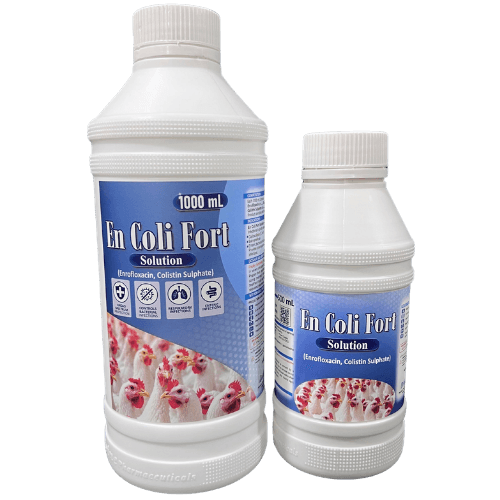
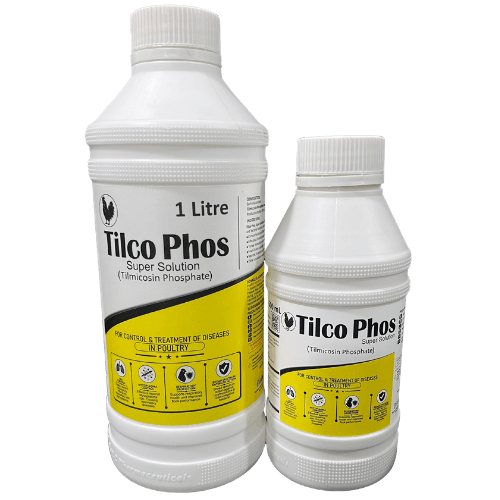
Divine Pharmaceuticals manufactures veterinary pharmaceutical products across dedicated Oral Liquid and Powder sections at its facility at Plot 226-A, Sundar Industrial Estate, Lahore. The published poultry product catalogue includes both water-soluble powder presentations — such as Amprol 500 (Amprolium HCl 50% WSP) and Noxy Flor — and oral liquid solution presentations such as En Coli Fort and Tilco Phos Super. Full catalogue detail with verified composition and pack data is at Products. Process and credentials context is published at Manufacturing and Quality & Compliance; international inquiry pathways are summarised on Export & Distribution.
Inventory management for mixed-formulation portfolios
Distributors carrying both powder and liquid presentations benefit from differentiated warehouse protocols. Separate storage zones with clear product identification reduce mix-up risk. FEFO (First Expiry, First Out) rotation is especially important for liquid products with shorter or temperature-sensitive shelf lives. Insurance coverage and stock-loss provisions should reflect the respective value and risk profile of liquid versus powder inventory.
When planning initial stocking levels, map market demand for each formulation type, anticipated seasonal demand variation, and lead time from manufacturer dispatch to your warehouse. Safety stock calculations for temperature-controlled products must account for shipping transit time, customs clearance, and cold-chain continuity risk — particularly relevant when sourcing from a manufacturer in a different climate zone or with longer sea-freight lead times.
Authoritative references
Storage and distribution expectations for temperature-sensitive products are addressed in DRAP QA/LT and supply-chain guidelines. Responsible antimicrobial use considerations relevant to poultry medicine programmes are summarised by FAO and WOAH.
Frequently asked questions
Is there a simple rule for when to prefer powder over liquid for poultry distribution?
No universal rule applies. The choice depends on farm water system equipment, cold-chain infrastructure across your distribution network, market preference, and the registered product options available. Evaluate both formulation types against your specific market conditions before deciding which to prioritise.
Do all oral liquid veterinary products require cold-chain distribution?
Not all. Storage and transport requirements depend on the specific formulation. Always confirm stated storage conditions from the approved label and product specification before committing to distribution. Never assume ambient storage is acceptable for a liquid product without explicit label confirmation.
How can I discuss powder and liquid formulations with Divine Pharmaceuticals?
Submit a product, distributor, or export inquiry through the Contact page and specify the formulation types you wish to discuss. Availability of evaluation materials depends on commercial and regulatory context and is confirmed during inquiry — it is not assumed here.
Where are Divine Pharmaceuticals' poultry products listed with formulation details?
The current catalogue is at /products?category=poultry. Each product page shows the verified dosage form (water-soluble powder or oral liquid solution), composition, and available pack sizes.
How does formulation type affect the registration dossier I need to prepare?
Registration dossiers differ significantly between oral liquid and powder presentations in stability study design, manufacturing process description, and testing requirements. Confirm local regulatory requirements with your national authority and request formulation-specific technical documentation from the manufacturer before beginning the application.
Related Articles
Choosing a Poultry Medicine Manufacturer: A Distributor Checklist
30 September 2026
How to Evaluate a Veterinary Pharmaceutical Manufacturer for Distribution
30 September 2026
Why Batch Documentation and Traceability Matter in Veterinary Manufacturing
30 September 2026
Explore Divine Pharmaceuticals' poultry formulation range
Review oral liquid and water-soluble powder presentations in the current poultry catalogue, then contact our team regarding export or distribution inquiries.