
Selecting a veterinary pharmaceutical manufacturer to distribute is one of the highest-stakes commercial decisions a distributor or importer makes. A poor choice exposes your business to regulatory risk, product complaints, and reputational damage with the farms and veterinarians who depend on your supply chain. A sound choice builds a stable, auditable pipeline of quality-assured medicines that strengthens your market position over time.
This guide outlines the evaluation criteria that experienced procurement and regulatory teams use when assessing a new veterinary pharmaceutical manufacturing partner. It applies whether you are sourcing products for a single domestic market or building a multi-country distribution portfolio across poultry or mixed livestock markets.
Start with regulatory standing in the country of manufacture
A manufacturer's home-country registration is the baseline. In Pakistan, the Drug Regulatory Authority of Pakistan (DRAP) licenses veterinary pharmaceutical manufacturers and issues a Drug Manufacturing Licence (DML). Any credible manufacturer operating in Pakistan should be able to provide its DML number — which you can verify independently with DRAP. Licences are dosage-form specific and should cover the product categories you intend to distribute.
Home-country regulatory standing does not confer product approval in your target market — you will need to confirm what local registration requires. But a manufacturer that cannot demonstrate its DML is in good order is a significant red flag. It suggests the quality and compliance disciplines that underpin a licensed operation may not be in place.
GMP certification: what to look for and what to ask
Good Manufacturing Practice (GMP) certification confirms that a government authority has inspected the manufacturing facility, evaluated its documentation systems, and found the operation meets a defined standard. In Pakistan, DRAP issues GMP certificates following formal inspection. A valid certificate should include the certificate number, issuing authority, facility address, scope of licensed activities, and expiry date.
Ask for a copy of the current GMP certificate and verify it is in date. Note whether the licensed dosage forms match the products you are evaluating. A manufacturer with a scope covering both oral liquids and powder presentations has invested in segregated production lines — relevant if you plan to distribute both formulation types. For a fuller explanation of what GMP means in practice, read Understanding GMP in Veterinary Pharmaceutical Manufacturing.
Quality management system certifications
Beyond GMP, look for internationally recognised management system certifications that verify how a company operates across its entire organisation. These are issued by accredited third-party bodies and require periodic surveillance audits — they are not self-declared.
- ISO 9001 (quality management): validates that documented quality processes are followed consistently.
- ISO 14001 (environmental management): confirms environmental controls are maintained in a manufacturing facility.
- ISO 45001 (occupational health and safety): demonstrates the manufacturer manages safety risks in facilities handling pharmaceutical inputs.
- GS1 membership: confirms standardised product identification, supporting supply-chain traceability.
Request copies of active certificates and note the certification body and expiry dates. A manufacturer holding multiple current certifications has committed to ongoing external audit scrutiny — a meaningful signal of institutional quality discipline, not a marketing claim.
Manufacturing infrastructure: dosage form capability
Understand which dosage forms the manufacturer actually produces and is licensed to produce. Veterinary pharmaceutical manufacturers typically specialise in oral liquids (solutions), water-soluble powders, or both. Each requires dedicated equipment, segregated environments, and distinct quality controls. A manufacturer with a separate Oral Liquid section and a separate Powder section has made capital and compliance investments that reduce cross-contamination risk and support diverse product portfolios.
Ask about minimum order quantities, lead times, and batch size flexibility. Overly large minimum orders tie up distributor working capital; insufficient capacity creates supply gaps during peak demand. Understand whether the manufacturer's production scale matches your expected volumes before advancing to commercial negotiation.
Batch documentation and traceability
Every batch of veterinary medicine should be traceable from raw material receipt through manufacture, QC testing, and dispatch. In a distribution context, this means receiving a Certificate of Analysis (CoA) for every batch, cross-referenced to the batch number printed on packaging. Ask how quickly the manufacturer can produce documentation for a regulatory audit or customer complaint — manufacturers who treat batch records as a burden rather than a system tend to generate quality problems that surface downstream.
The article Why Batch Documentation and Traceability Matter in Veterinary Manufacturing covers what distributors should understand and expect from this area in depth.
Quality assurance vs quality control: the independence question
A manufacturer with mature quality functions maintains both a Quality Assurance (QA) system — governing documentation, change control, deviations, and supplier qualification — and an independent Quality Control (QC) laboratory that tests materials and finished products. Critically, QA should hold batch release authority independent from production management. Ask whether the same manager who runs production also approves batch release. If yes, that is a structural quality risk.
For a full explanation of how QA and QC differ and what each signals about a manufacturer, read Quality Assurance vs Quality Control in Veterinary Pharmaceuticals.
Industry affiliations and professional standing
Membership of relevant professional and industry associations indicates a manufacturer participates in sectoral standards, regulatory dialogue, and professional networking. For Pakistan-based veterinary pharmaceutical companies, relevant bodies include the Pakistan Veterinary Pharmaceutical Association (PVPA), the Lahore Chamber of Commerce and Industry (LCCI), and the Pakistan Poultry Association. These affiliations suggest a company intends to operate transparently within professional networks — relevant when regulatory changes, market access questions, or commercial disputes arise.
Product portfolio: accuracy matters more than breadth
Review the manufacturer's published product catalogue carefully. Verify that products are available in the stated formulations, strengths, and pack sizes — not aspirational listings. For poultry medicine, check whether the portfolio covers primary health management categories relevant to your market: antiparasitic, antibacterial, respiratory support, and supportive care. Ask clearly which products are currently available versus in development or pending registration. Distributors carrying unavailable products lose credibility with veterinary customers quickly.
Commercial terms, market support, and communication
A technically strong manufacturer that communicates poorly or imposes impractical commercial terms is a difficult partner in practice. Assess: how quickly does their export or commercial team respond to your initial inquiry? Are pricing and payment terms clear? Can they provide samples and documentation promptly? Is there a defined distributor support contact? Ask how product complaints and pharmacovigilance reports are handled — a manufacturer with a clear, documented adverse-event channel demonstrates quality accountability beyond the factory gate.
Facility visits and remote audits
For significant distribution commitments, a facility visit or structured remote audit is standard practice. Review manufacturing floor segregation, environmental monitoring records, and QC laboratory capability. Ask to see a batch record and a sample deviation report to understand how non-conformances are managed. Remote document audits — covering certificate verification, quality manual review, batch record samples, and CoA format review — are a practical alternative when travel is not feasible.
Where Divine Pharmaceuticals fits this framework
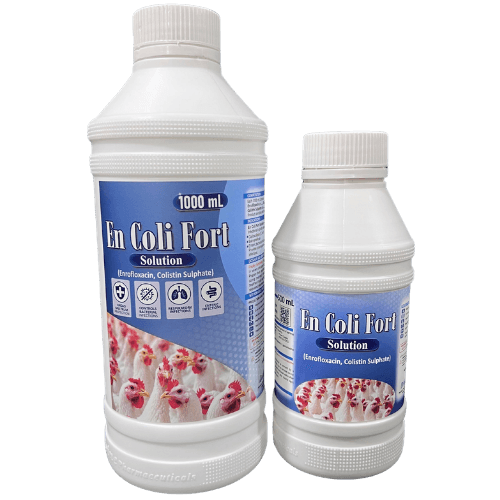
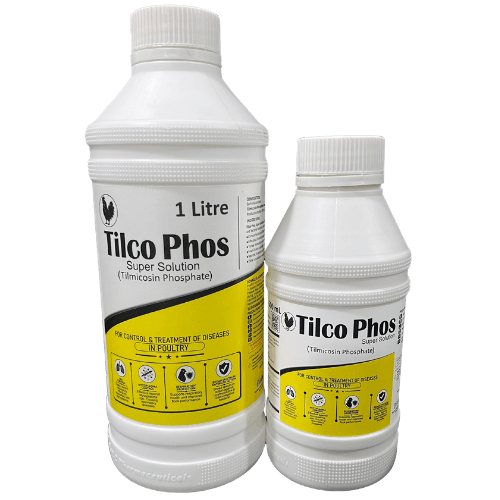
Divine Pharmaceuticals is a DRAP-licensed veterinary pharmaceutical manufacturer at Plot 226-A, Sundar Industrial Estate, Lahore, Pakistan. The company holds Drug Manufacturing Licence DML 000850 and GMP Certificate GMP/C/000153/52026, with current ISO 9001, ISO 14001, and ISO 45001 certifications. GS1 registration supports standardised product identification. Manufacturing operates across dedicated Oral Liquid and Powder sections. Industry affiliations include PVPA, LCCI, and the Pakistan Poultry Association. The current poultry product catalogue is available at Products.
For international distribution context, review Export & Distribution. To start a conversation, submit an export inquiry. Quality documentation can be requested through Resources. Manufacturing and quality system detail is published at Manufacturing and Quality & Compliance.
Building a structured evaluation scorecard
Structure your evaluation as a scored checklist so manufacturers can be compared objectively. Categories to score: regulatory standing and DML validity, GMP certificate currency and scope, ISO certifications, QA/QC independence, batch documentation quality, portfolio accuracy and availability, commercial responsiveness, and pharmacovigilance channel clarity. Weight categories according to your regulatory environment and customer audit requirements. A detailed checklist framework is available in Choosing a Poultry Medicine Manufacturer: A Distributor Checklist.
Authoritative references
For Pakistan regulatory context, see DRAP guidance on veterinary drugs and quality surveillance. International animal-health standards are published by the World Organisation for Animal Health (WOAH).
Frequently asked questions
What is the most important document to request from a veterinary pharmaceutical manufacturer?
The Drug Manufacturing Licence (or equivalent national manufacturing authorisation) and the current GMP certificate. Together they confirm regulatory standing and that the facility has passed a government inspection against pharmaceutical manufacturing standards.
Do ISO certifications replace a GMP inspection?
No. ISO 9001 addresses general quality management system principles; GMP is a pharmaceutical-specific framework with legal standing in national drug regulation. Both are valuable, but a valid GMP certificate is the pharmaceutical regulatory prerequisite.
Can I distribute a DRAP-registered Pakistani veterinary product in my country without further steps?
Not automatically. Local registration requirements vary by jurisdiction. Confirm what your national authority requires before importing or promoting the product. A reputable manufacturer will support your registration process with the necessary documentation.
How do I verify a DML or GMP certificate is genuine?
Contact DRAP directly or request full licence documentation with issuing authority reference details. Credible manufacturers welcome verification requests from serious distribution partners.
How do I start a distribution conversation with Divine Pharmaceuticals?
Submit a distributor or export inquiry through the Contact page. The commercial team will respond with product availability, documentation, and next steps.
Related:ManufacturingQuality & CompliancePoultry ProductsExport & DistributionExport InquiryResources
Related Articles
Explore Divine Pharmaceuticals as a distribution partner
Review our manufacturing credentials, GMP and ISO certifications, and poultry product portfolio. Contact our team for export and distribution inquiries.