
Search for "veterinary pharmaceutical companies in Pakistan" and most results are aggregate directories, classified listings, and listicles. For a procurement team, an importer, or a distribution manager those pages rarely answer the questions that actually drive a sourcing decision: Does this manufacturer hold a current Drug Manufacturing Licence? Has the facility been GMP-inspected by the national regulator? Is its quality management system independently certified? This guide is written for buyers who need answers to those questions — not a ranked directory.
Pakistan's veterinary pharmaceutical manufacturing sector is regulated by the Drug Regulatory Authority of Pakistan (DRAP). Manufacturers must hold a Drug Manufacturing Licence (DML), operate licensed dosage-form sections, and pass periodic GMP inspections before they can legally market veterinary pharmaceutical products. Understanding what those requirements mean in practice — and how to verify compliance independently — gives procurement teams a materially more reliable basis for supplier assessment than any directory ranking.
The Regulatory Foundation: DRAP Licensing
DRAP administers veterinary drug manufacturing licences under Pakistan's pharmaceutical regulatory framework. A Drug Manufacturing Licence (DML) specifies the licensed facility address, the authorised manufacturing sections — such as oral liquids, water-soluble powders, or injectables — and the date of issue. Licences must be renewed, are tied to specific dosage-form categories, and are subject to inspection. Any veterinary pharmaceutical manufacturer operating legally in Pakistan must hold a current, valid DML that covers the product types they are offering you.
When evaluating a supplier, request a copy of the DML at the start of any serious procurement conversation. Note the licence number, the issuing authority, the facility address, and the scope of licensed sections. DRAP maintains drug manufacturing licence information as part of its public regulatory framework — the licence number and facility details are verifiable. A manufacturer that cannot or will not produce its DML is a material compliance red flag: it raises questions about whether the quality and documentation disciplines that underpin a licensed operation are genuinely in place.
GMP Certification: What the Certificate Actually Tells You
Good Manufacturing Practice (GMP) certification is issued by DRAP following a formal facility inspection. The inspection evaluates premises, equipment qualification, environmental controls, personnel training records, documentation systems, raw material handling, in-process controls, and finished-product quality control procedures. A valid GMP certificate issued by DRAP lists the issuing authority, a certificate reference number, the facility address, the licensed manufacturing sections, and an expiry date.
When reviewing a GMP certificate, confirm it is current — an expired certificate is not evidence of current compliance. Verify that the licensed dosage-form sections on the certificate match the products you are evaluating. A manufacturer licensed to produce both oral liquids and water-soluble powders has invested in separate production infrastructure with distinct environmental controls and cross-contamination management for each format. That specificity matters when you are building a multi-product distribution portfolio. For a more detailed explanation of what GMP standards require in practice, see Understanding GMP in Veterinary Pharmaceutical Manufacturing.
Quality Management System Certifications
ISO management system certifications are issued by accredited third-party certification bodies following documented audits and are subject to annual surveillance reviews. They are not self-declarations. In a veterinary pharmaceutical manufacturing context, three certifications are directly relevant:
- ISO 9001 (quality management systems): documents that quality-related processes are defined, consistently followed, and subject to structured continual improvement — the foundation of a functioning quality management system.
- ISO 14001 (environmental management systems): confirms that the environmental aspects of manufacturing operations — including chemical waste, emissions, and resource consumption — are controlled and monitored through a systematic framework.
- ISO 45001 (occupational health and safety management systems): verifies that workplace safety is managed systematically, relevant in a manufacturing environment handling active pharmaceutical ingredients, solvents, and packaging materials.
A manufacturer holding all three certifications has been evaluated across quality, environment, and occupational safety by independent auditors operating under an internationally recognised standard — not only by its home-country regulatory authority. Request the certificate numbers and expiry dates for each certification, and verify currency directly with the issuing certification body where possible. For further context on how quality assurance and quality control functions operate within a veterinary pharmaceutical manufacturer, see Quality Assurance vs Quality Control in Veterinary Pharmaceutical Manufacturing.
Formulation Scope and Manufacturing Infrastructure
The formulation types a manufacturer can legitimately produce are defined by the licensed sections listed on its GMP certificate and DML — not by what its sales materials claim. In the Pakistani poultry pharmaceutical sector, two formulation categories dominate commercial supply: oral liquid preparations and water-soluble powder preparations. Each requires distinct manufacturing infrastructure, separate environmental controls, and dedicated quality control testing protocols appropriate to the dosage form.
Oral liquid formulations
Oral liquid veterinary medicines — solutions or suspensions administered through drinking water or by direct oral delivery — require dedicated mixing vessels, calibrated filling lines, container-closure integrity controls, and microbiological testing appropriate to the specific formulation. A manufacturer with a licensed oral liquid section and a documented production history in that format presents a verifiable supply basis. The registered product portfolio in the oral liquid category is the most reliable indicator of established production capability.
Water-soluble powder formulations
Water-soluble powders are the dominant delivery format across commercial poultry production in Pakistan and in many markets where Pakistani manufacturers export. They dissolve into drinking water and are used across antimicrobials, vitamins, electrolytes, anticoccidials, and feed supplements. A licensed powder manufacturing section should have documented dust controls and segregation procedures, appropriate packaging capability for commercial volumes, and registered products demonstrating established production in the category. Stated capacity figures without a corresponding registered product portfolio offer limited evidential value.
Batch Documentation and Traceability
Quality documentation is the evidence layer that sits beneath certifications and licences. Before establishing any distribution relationship, experienced procurement and regulatory teams request specific documentation to evaluate a manufacturer's traceability systems. The core documents to request — and what each one tells you — are covered in detail in Batch Documentation and Traceability in Veterinary Pharmaceutical Manufacturing. The essential items are:
- Certificates of Analysis (CoA) for representative finished batches, confirming tested results against approved specifications for the specific product — not a generic template.
- Batch manufacturing records that link raw material lot numbers through to finished goods, establishing a complete traceable chain from incoming materials to shipped product.
- Stability data demonstrating that the product maintains identity, purity, and potency under defined storage conditions across its full stated shelf life.
- DRAP product registration certificates for each product you intend to distribute, confirming that the product holds a valid marketing authorisation for manufacture and sale in Pakistan.
A CoA provided at time of shipment should carry a batch number that matches the outer carton labelling for that consignment. If the manufacturer's quality system is functioning correctly, producing these records is straightforward. Difficulty obtaining them, documents that appear inconsistent with stated product registrations, or CoA formats that lack the specificity expected of GMP-compliant batch testing — any of these warrant further investigation before any commercial commitment is made.
Industry Memberships and Professional Associations
Industry association memberships do not substitute for regulatory compliance but provide directionally useful context. Active participation in the Pakistan Veterinary Pharmaceutical Association (PVPA), the Pakistan Poultry Association, chambers of commerce such as the Lahore Chamber of Commerce and Industry (LCCI), and global supply chain bodies such as GS1 Pakistan reflects a manufacturer's engagement with sector standards and traceability infrastructure. GS1 membership supports barcode-based product identification — relevant for markets where product serialisation and traceability at point of distribution are expected by buyers or mandated by regulators.
Ask a prospective supplier which industry bodies they are affiliated with and for what period. Verify current membership status directly with the association where possible. Long-standing, active involvement in sector bodies is a weak but directionally useful signal of operational continuity and industry engagement — it does not replace compliance verification but adds context to it.
Assessing the Registered Product Portfolio
A manufacturer's published product catalogue is one of the most transparent indicators of its operational scope available before any commercial conversation begins. Products registered with DRAP for veterinary use carry a marketing authorisation that confirms the product formulation, strength, and manufacturer have passed regulatory review. A manufacturer that publishes a detailed, verifiable product catalogue — with product names, formulation types, dosage forms, and registration status — allows buyers to assess portfolio depth and registration coverage before engaging commercially.
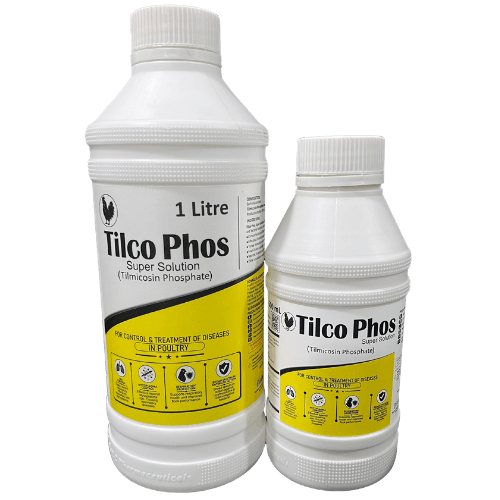
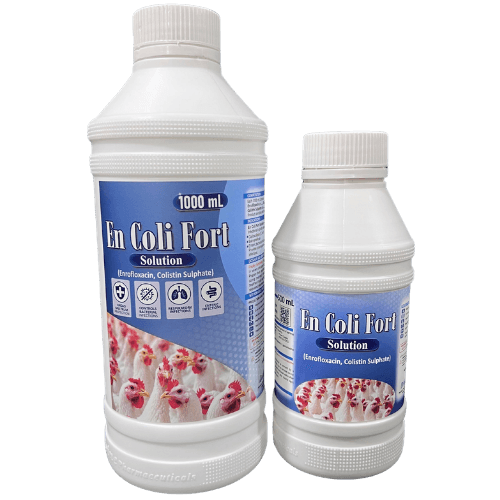
In Pakistan's poultry pharmaceutical sector, a credible supplier's portfolio typically spans multiple product categories: antimicrobial preparations for bacterial disease management, vitamin and electrolyte products for nutritional support and stress recovery, anticoccidial preparations, antiparasitic products, and respiratory support formulations. A manufacturer able to supply verifiable DRAP registration documentation for products across more than one of these categories presents a more substantive portfolio claim than one relying primarily on marketing materials. The poultry products catalogue represents one transparent approach to published portfolio presentation.
Commercial Evaluation: What to Verify Directly
Regulatory compliance and quality credentials establish whether a manufacturer can supply. Commercial criteria determine whether the relationship is operationally feasible for your market. These factors vary between suppliers and cannot be generalised from directory entries or website descriptions — they require direct engagement:
- Minimum order quantities per SKU and per shipment, which affect the economics of trial orders and the viability of a multi-SKU portfolio in lower-volume markets.
- Standard lead times from confirmed purchase order to shipment-ready goods, and whether seasonal demand variability in the domestic market affects export availability.
- Regulatory documentation support — whether the manufacturer can provide the product dossier, master product file, or technical documentation required for import registration in your target market.
- Labelling and packaging flexibility for dual-language labels, private-label requirements, or country-specific packaging specifications where applicable.
- Export experience and familiarity with customs documentation, certificate of origin requirements, and phytosanitary or other import clearance documentation relevant to your jurisdiction.
None of these factors should be assumed from a supplier's website or inferred from a directory profile. They require a structured discovery conversation with the manufacturer's commercial or regulatory team. The export and distribution page illustrates how a manufacturer might position its commercial offering for international buyers. To initiate a formal export inquiry, use the export inquiry form.
How This Differs from Company Directories
Online directories of veterinary pharmaceutical companies in Pakistan aggregate company names and contact details, often with self-reported information about product ranges, export markets, or certifications. That information is not independently verified. Directory rankings typically reflect commercial placement — the position a company has paid for or accumulated through platform engagement — rather than compliance quality, manufacturing capability, or product registration depth.
The evaluation framework in this guide is structured differently. Each criterion — DML verification, GMP certificate currency and scope, ISO certification status, batch documentation quality, registered product portfolio depth — produces an answer from a primary source: DRAP's regulatory records, third-party certification body registers, and verifiable product registration data. A manufacturer that performs well against these criteria presents a materially lower compliance and operational risk than one that does not, regardless of where either appears in any directory. The checklist in Choosing a Poultry Medicine Manufacturer: Distributor Checklist provides a concise reference format for applying these criteria systematically.
Authoritative References
Related:DRAP: Veterinary DrugsDRAP: Quality SurveillanceDRAP: Drug Manufacturing LicenceWOAH: Standards for Veterinary Medicines
Related:Export & DistributionManufacturingQualityCompanyPoultry ProductsResources
Frequently Asked Questions
Is this guide a ranking of veterinary pharmaceutical companies in Pakistan?
No. This is a buyer evaluation framework, not a ranked directory. It explains how to assess veterinary pharmaceutical manufacturers in Pakistan against verifiable criteria — DRAP licensing, GMP certification, ISO certifications, batch documentation, and registered product portfolios — so that procurement teams can make evidence-based sourcing decisions rather than relying on commercial rankings.
What regulatory body licenses veterinary pharmaceutical manufacturers in Pakistan?
The Drug Regulatory Authority of Pakistan (DRAP) is responsible for licensing veterinary pharmaceutical manufacturers, approving product registrations, and enforcing GMP standards across both human and veterinary pharmaceutical sectors. A manufacturer's Drug Manufacturing Licence (DML), issued by DRAP, is the baseline evidence of legal manufacturing authorisation in Pakistan. DRAP's veterinary drug regulatory information is published at dra.gov.pk.
How do I verify that a Pakistani manufacturer's GMP certificate is current?
Request the original GMP certificate document including the certificate reference number, issuing authority (DRAP in Pakistan), facility address, licensed manufacturing scope, and expiry date. Cross-reference these details with DRAP directly. Certificates that are undated, lack a verifiable reference number, or do not include a licensed scope appropriate to the products you are evaluating should be treated as insufficient evidence of current GMP compliance.
How do I evaluate a manufacturer's quality system without relying on their marketing claims?
Request primary-source documentation: the DML number (verifiable with DRAP), GMP certificate with reference number and expiry, ISO certification numbers with issuing certification body names (verifiable through those bodies), Certificates of Analysis for representative batches, and DRAP product registration certificates for the specific products you are evaluating. Each of these can be verified independently. Marketing materials and website claims should not substitute for this documentation.
Which internationally recognised certifications should a veterinary pharmaceutical manufacturer hold?
ISO 9001 (quality management systems), ISO 14001 (environmental management systems), and ISO 45001 (occupational health and safety management systems) are the most relevant internationally recognised management system certifications for a veterinary pharmaceutical manufacturing operation. These are issued by accredited third-party certification bodies after independent audits and require annual surveillance. They supplement GMP certification rather than replace it.
Does Divine Pharmaceuticals hold DRAP licensing and ISO certifications?
Divine Pharmaceuticals holds DRAP Drug Manufacturing Licence DML 000850 and GMP certificate GMP/C/000153/52026. The company also holds ISO 9001, ISO 14001, and ISO 45001 certifications. Its licensed manufacturing sections cover oral liquid and water-soluble powder veterinary products. The facility is located at Plot 226-A, Sundar Industrial Estate, Lahore, Pakistan. Further detail is available on the manufacturing and quality pages of this website.
How many poultry products does Divine Pharmaceuticals currently publish online?
Divine Pharmaceuticals currently publishes 22 poultry products in its online catalogue. Livestock is a company manufacturing focus, though no livestock products are currently published online. The full poultry product range is available to browse in the products section of this website.
How do I initiate a distribution or export inquiry with Divine Pharmaceuticals?
International distribution and export inquiries can be submitted through the export inquiry form on this website. You can also visit the export and distribution page for an overview of how the company serves international buyers. For general or product-specific questions, the contact page provides additional inquiry options.
Related Articles
Evaluate Divine Pharmaceuticals for Your Market
Divine Pharmaceuticals is a DRAP-licensed, GMP-certified veterinary pharmaceutical manufacturer based in Lahore, Pakistan. For export and distribution inquiries, regulatory documentation requests, or product information, contact the team directly.