
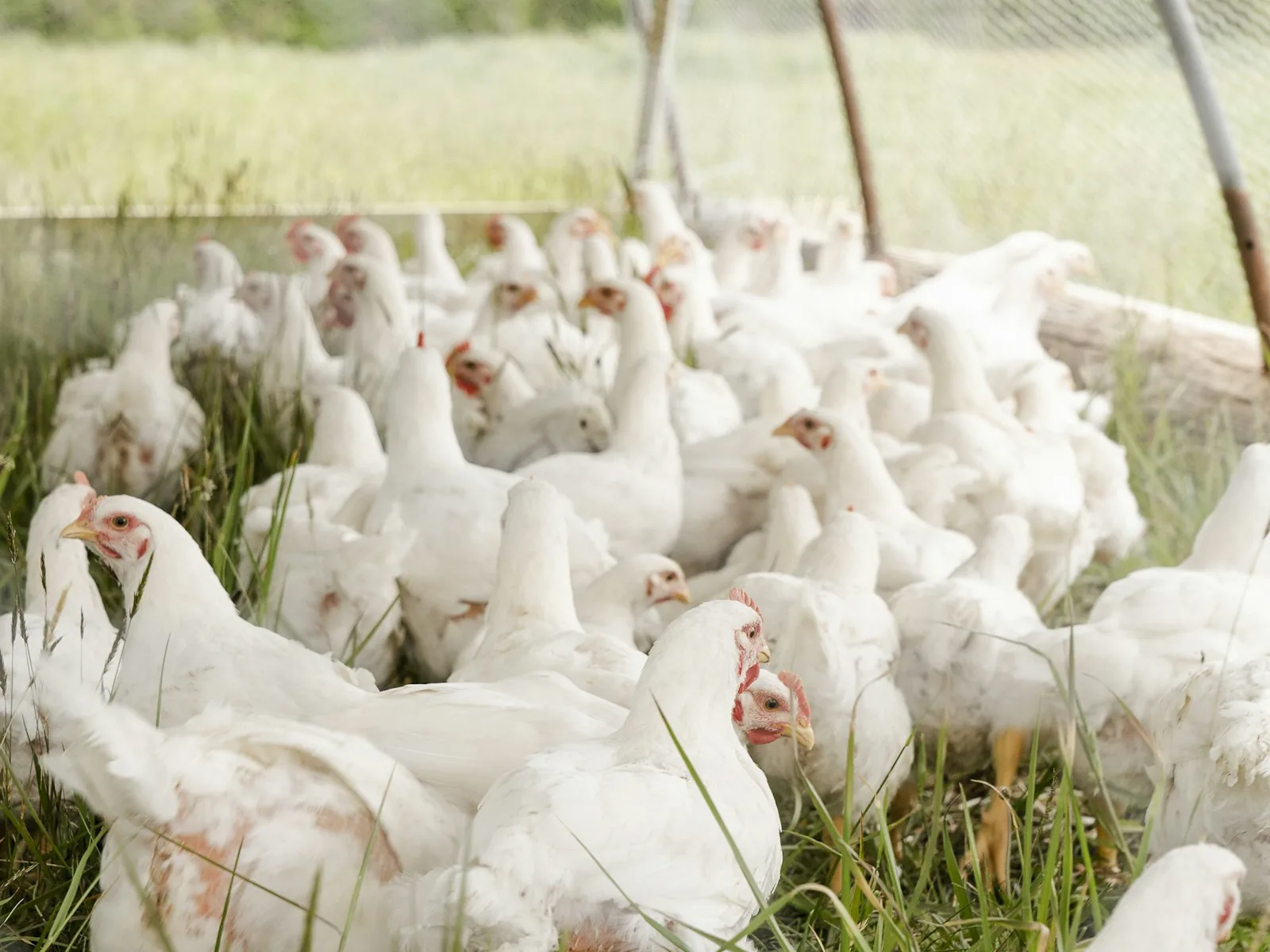
Coccidiosis is a parasitic intestinal disease of poultry caused by Eimeria species. It matters because intestinal damage can reduce nutrient absorption, impair growth, increase susceptibility to secondary problems, and affect flock uniformity and economic performance. Control is rarely a single product decision: it combines hygiene, litter management, monitoring, veterinary diagnosis, and — when indicated — registered medicines used according to the label.
The following overview is educational. It does not provide dosing schedules or farm-specific treatment protocols. Veterinary diagnosis should guide any medication decision.
What coccidiosis is — at a high level
Eimeria parasites complete a lifecycle that includes an environmental oocyst stage. Birds ingest sporulated oocysts from litter or contaminated surroundings; parasites then invade intestinal cells. Species differ in which intestinal regions they prefer and in the severity of lesions they can cause. Peer-reviewed reviews, such as this PMC overview of coccidiosis management in poultry, summarise lifecycle biology and integrated control approaches.
Practical takeaway for farms: oocysts in the environment mean litter moisture, stocking density, and cleaning between flocks strongly influence challenge levels.
Risk factors on commercial farms
- Wet or poorly managed litter that favours oocyst survival and sporulation
- High stocking density and uneven bird distribution
- Inadequate cleaning and disinfection between flocks
- Breakdowns in biosecurity that allow contamination to move between houses
- Stressors that reduce feed or water intake and complicate monitoring
FAO-linked industry discussions also highlight hygiene as foundational for reducing coccidiosis pressure and supporting more responsible antimicrobial use overall — see FAO’s antimicrobial resistance portal for the wider stewardship context.
Monitoring and veterinary diagnosis
Early cues can include diarrhoea, bloody droppings in some presentations, huddling, reduced feed conversion, or uneven growth. None of these signs alone confirms coccidiosis. Veterinarians may use lesion scoring, oocyst counts, or other diagnostics to identify species involvement and severity.
Monitoring programmes should be written into farm SOPs: who checks litter, how often droppings are reviewed, when mortality triggers a call to the veterinarian, and how findings are recorded for the next flock.
Prevention programmes and stewardship
Prevention typically layers vaccination strategies (where used), anticoccidial programmes designed by veterinarians or nutritionists, litter management, and biosecurity. Rotational or shuttle approaches are discussed in the veterinary literature to manage resistance risk — decisions that require professional design, not ad-hoc product switching.
When medication is prescribed, follow approved labels exactly. Avoid extending courses, combining products, or copying regimens from other farms without veterinary oversight. Stewardship principles are covered further in Responsible Use of Veterinary Medicines in Poultry Production.
Catalogue products containing Amprolium HCl
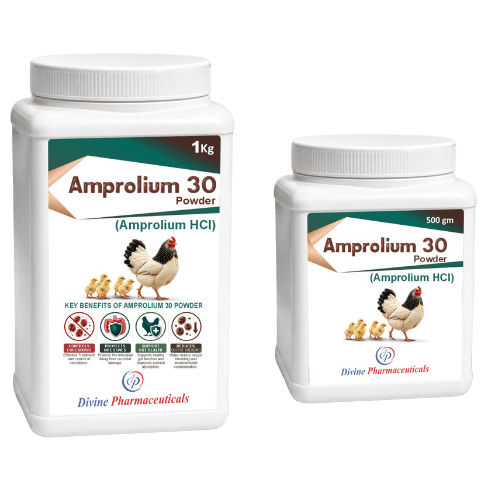
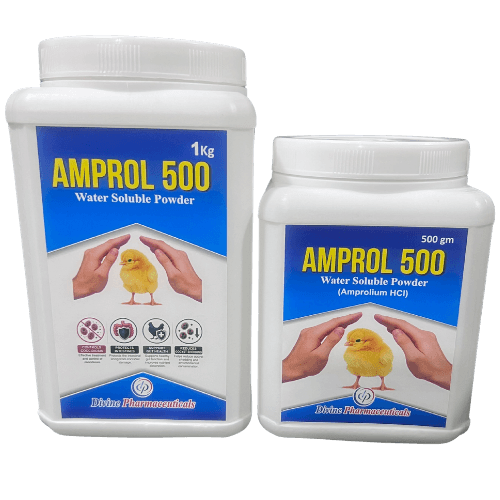
Divine Pharmaceuticals currently lists water-soluble powder presentations whose verified composition includes Amprolium HCl, including Amprol 500 (Amprolium HCl 50%) and Amprolium 30 (Amprolium HCl 30%). Ampromine is also listed with Amprolium HCl 20% in the current catalogue. These pages document composition and pack options; they are not instructions for use.
For water-administration considerations when a veterinarian has prescribed a water-soluble product, see Supporting Poultry Health Through Water Medication Systems and How to Choose the Right Water-Soluble Veterinary Product for Poultry.
Quality, documentation, and support
Consistent assay and packaging support depend on manufacturing quality systems. Learn more on Quality & Compliance. Request catalogues or certificates via Resources, or contact us for commercial inquiries.
Lifecycle awareness for farm teams
Oocysts shed in faeces can contaminate litter for subsequent birds. Sporulation depends on moisture, temperature, and oxygen. That is why wet litter control and thorough cleanout between flocks are not optional extras — they interrupt the environmental stage of the parasite. Teams that understand this biology are more likely to prioritise litter quality during busy production weeks.
Different Eimeria species favour different intestinal regions and age windows. A monitoring plan designed with your veterinarian should reflect the species historically important on your site and in your region, rather than a generic checklist copied from another country without local adaptation.
Integrating vaccination and anticoccidial strategies
Some operations use live coccidiosis vaccines; others rely primarily on in-feed or water-administered anticoccidial programmes; many combine approaches over the year. Each strategy has operational requirements — for example, litter conditions after vaccination may need managed oocyst recycling. These decisions belong to veterinary and nutrition professionals, not to informal product substitution between flocks.
When water-soluble Amprolium HCl presentations such as Amprol 500 or Amprolium 30 appear in a veterinarian plan, confirm that farm water systems can deliver them evenly. See water medication systems guidance.
Secondary challenges and gut health
Intestinal damage from coccidiosis can open the door to secondary bacterial problems. That relationship sometimes leads to antimicrobial use that could have been reduced with earlier coccidiosis control. Prevention and accurate diagnosis therefore support antimicrobial stewardship goals promoted by FAO, WHO, and WOAH — themes expanded in our responsible use article.
Communicating with the supply chain
Integrators, feed mills, and veterinarians need consistent data from the farm. Share lesion scores, oocyst counts, and medicine batch records in agreed formats. Transparent communication helps the whole chain refine prevention instead of reacting house by house after losses are already visible.
When requesting supporting manufacturer documents for audits or registration files, use the Resources Request Document workflow so certificates and catalogues remain controlled and current.
Practical litter and cleanout checklist themes
While every farm needs an SOP tailored to its housing, successful coccidiosis prevention programmes repeatedly emphasise dry litter, prompt removal of wet spots, controlled drinker height and pressure to limit spillage, and thorough organic-matter removal before disinfection between flocks. Disinfectants cannot compensate for litter left in place.
Down-time between flocks should be long enough for houses to dry. Rushing placement into damp houses raises oocyst challenge for the next cycle. Coordinate cleanout crews, litter suppliers, and veterinary advisers so the calendar protects drying time rather than compressing it under production pressure.
Keep photographic or written evidence of cleanout completion for integrator audits. Pair that evidence with medicine and vaccine records so intestinal-health performance can be reviewed flock by flock with complete context.
Integrating monitoring into weekly farm routines
Coccidiosis control fails when monitoring is episodic. Embed simple weekly checks: litter moisture feel-tests in known wet zones, water meter trends, unexplained droppings changes, and scheduled lesion or oocyst sampling when the veterinarian deems them useful. Tie those checks to who owns each action and where results are filed.
When registered anticoccidial products such as Amprol 500 or Amprolium 30 are part of an approved programme, treat their use as one controlled step among many — never as a substitute for dry litter and hygiene. Selection guidance for water-soluble presentations is covered in How to Choose the Right Water-Soluble Veterinary Product for Poultry.
Quarterly reviews with the veterinarian should compare intestinal-health KPIs, medicine courses, and cleanout compliance. That cadence keeps prevention programmes honest and reduces the temptation to escalate medicine use when the real gap is environmental. Stewardship expectations from FAO antimicrobial resistance resources reinforce the same principle at industry scale.
Finally, keep a short written “intestinal health playbook” for each complex: target litter moisture ranges, drinker management rules, sampling schedule, escalation contacts, and which registered products are authorised for use only after veterinary confirmation. Updating that playbook after every significant coccidiosis event turns experience into institutional knowledge instead of tribal memory.
Authoritative references
Additional clinical background is available from the Merck Veterinary Manual – Coccidiosis in Poultry and the peer-reviewed PMC review on management and control of coccidiosis.
Frequently asked questions
Can good litter management reduce coccidiosis risk?
Yes. Litter moisture and hygiene influence oocyst survival and sporulation. Litter management is a core prevention tool alongside veterinary programmes.
Do Divine product pages include dosages for coccidiosis?
Public catalogue pages emphasise verified composition and pack data. Use approved product labelling and veterinary guidance for any treatment instructions — do not rely on website summaries for dosing.
What Amprolium HCl products are in the current catalogue?
Amprol 500, Amprolium 30, and Ampromine are listed with Amprolium HCl strengths shown on their product pages. Confirm availability and registration for your market with our team.
Is coccidiosis only a broiler problem?
Eimeria can affect multiple poultry production types. Risk patterns differ by system; veterinarians tailor monitoring and prevention accordingly.
How does this relate to antimicrobial stewardship?
Strong prevention and accurate diagnosis reduce unnecessary medicine use and support broader antimicrobial stewardship goals promoted by FAO, WHO, and WOAH.
Related Articles
Review amprolium presentations and request documents
Explore current catalogue products containing Amprolium HCl, or request literature through Resources. Always follow veterinary and label guidance.